.png)
What Are the Main Parts of an RC Plane?
By: Michael Snedden On: 8 September 2026
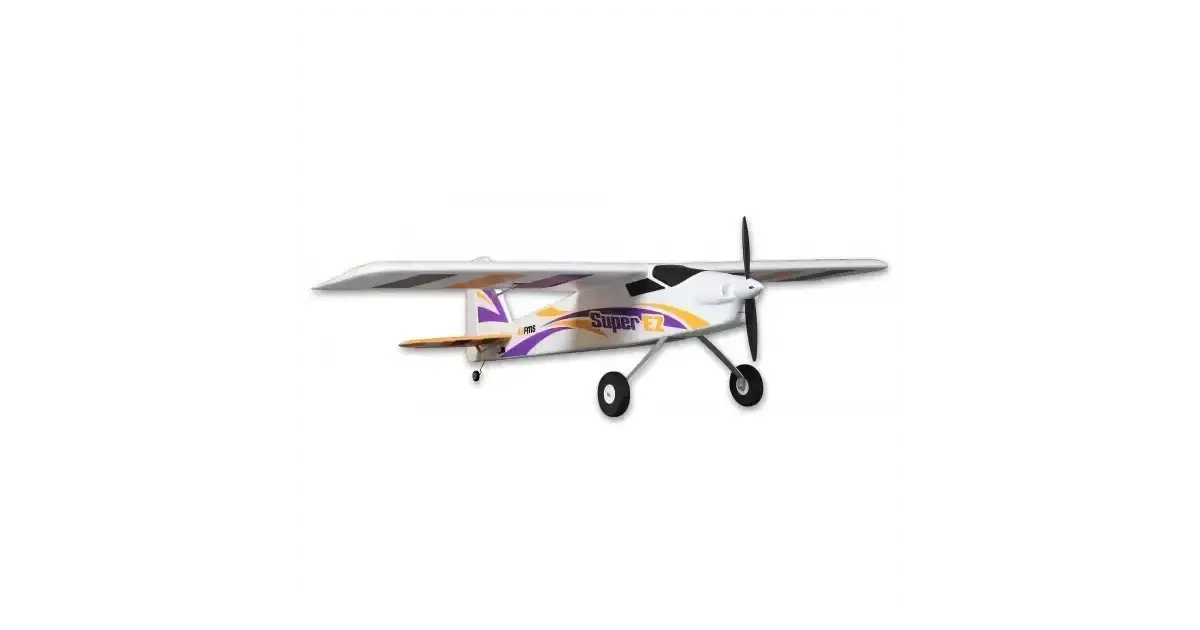

The main parts of an RC plane are the fuselage, wings, tail surfaces, landing gear, motor or engine, propeller or ducted fan, servos, receiver, speed controller and battery or fuel system.
Each part has a specific job. The wings create lift, the tail helps control pitch and direction, the motor provides thrust, the servos move the control surfaces, and the receiver translates commands from the transmitter into movement.
Campbelltown Hobbies stocks a very large range of RC plane parts, including wings, tails, fuselages, propellers, receivers, motors, ESCs, spinners and other replacement components.
What Are the Main Components of an RC Plane?
Although RC aircraft vary enormously in size and design, most share the same basic groups of components.
These include:
- Fuselage
- Wings
- Tail surfaces
- Control surfaces
- Motor or engine
- Propeller or ducted fan
- Electronic speed controller
- Receiver
- Servos
- Battery
- Landing gear
- Wheels
- Cowling and spinner where fitted
A simple trainer plane may use only a few channels and a straightforward electric power system.
A more advanced scale aircraft, aerobatic plane or EDF jet can use far more complex electronics and control systems.
What Does the Fuselage Do?
The fuselage is the main body of the aircraft.
It joins the major components together and commonly contains:
- Battery
- Receiver
- ESC
- Servos
- Motor mounting
- Landing gear mounting points
- Cockpit or canopy
The shape and construction of the fuselage depend heavily on the type of aircraft.
Trainer planes are often designed around durability and easy access, while scale aircraft may place more emphasis on realistic appearance.
Campbelltown Hobbies' plane-parts category specifically includes replacement fuselages alongside wings and tail components.
How Does the RC Plane Wing Generate Lift?
The wing is the main lifting surface of the aircraft.
As the plane moves forward, air flows around the wing. The shape and angle of the wing create aerodynamic forces that allow the aircraft to support its weight.
Wing design affects:
- Stability
- Speed
- Stall behaviour
- Manoeuvrability
- Lift
- Landing characteristics
A trainer plane often uses a high-wing design because it can provide more forgiving flight characteristics.
A racing or aerobatic model may use a very different wing because stability is no longer the only priority.
What Are Ailerons?
Ailerons are movable control surfaces usually located near the outer trailing edge of each wing.
They control roll.
When one aileron moves up and the other moves down, the aircraft rolls to one side.
This lets the pilot bank the aircraft into a turn.
Not every simple beginner plane uses ailerons, but most hobby-grade RC aircraft do.
What Does the Tail Do?
The tail usually includes:
- Horizontal stabiliser
- Elevator
- Vertical stabiliser
- Rudder
These components help control and stabilise the aircraft.
Elevator
The elevator controls pitch.
It changes whether the nose moves up or down.
Rudder
The rudder controls yaw.
It moves the nose left or right around the aircraft's vertical axis.
Stabiliser Surfaces
The horizontal and vertical stabilisers help keep the aircraft flying predictably rather than constantly rotating around its axes.
What Do the Motor and Propeller Do?
The motor provides the power that drives the propeller.
The propeller converts that rotational power into thrust, moving the aircraft forward.
Campbelltown Hobbies stocks numerous electric aircraft motors and propellers through its plane-parts range, including APC, Master Airscrew and FMS products.
The correct propeller matters because its:
- Diameter
- Pitch
- Material
- Blade design
must suit the motor, aircraft and intended performance.
Installing the wrong propeller can reduce performance or overload the motor and ESC.
What About RC Jet Planes?
A remote control jet plane may not use a conventional external propeller.
Electric ducted fan aircraft, commonly called EDF jets, use a multi-blade fan inside a duct to generate thrust.
Campbelltown Hobbies' plane-parts range includes motors specifically intended for ducted-fan applications.
EDF aircraft can provide a much more jet-like appearance and sound than a propeller aircraft, but they can also require higher flying speeds and more experienced control.
What Does the Electronic Speed Controller Do?
In an electric RC plane, the ESC sits between the battery and motor.
Its job is to control how much electrical power reaches the motor.
When you move the throttle stick on the transmitter:
- The transmitter sends the command.
- The receiver receives it.
- The ESC adjusts motor power.
- The motor speeds up or slows down.
Some ESCs also provide regulated power to the receiver and servos through a Battery Eliminator Circuit, or BEC.
Campbelltown Hobbies stocks aircraft ESCs in different current ratings for different power systems.
How Does the RC Plane Control System Work?
The pilot controls the aircraft using a radio transmitter.
The transmitter sends commands to the receiver fitted inside the plane.
The receiver then sends those commands to the appropriate components.
For example:
- Elevator stick movement → elevator servo
- Rudder command → rudder servo
- Aileron command → aileron servo
- Throttle command → ESC
Campbelltown Hobbies' plane-parts range includes aircraft receivers such as Spektrum multi-channel receivers.
What Do the Servos Do?
Servos physically move the aircraft's control surfaces.
A typical aircraft may have separate servos for:
- Ailerons
- Elevator
- Rudder
- Flaps
- Retractable landing gear
Larger or more advanced aircraft may use several servos across one control surface.
Servo size, speed, torque and voltage need to suit the aircraft.
What Is the Role of the Battery?
In an electric RC aircraft, the battery provides energy for the propulsion system and electronics.
Common modern electric planes use lithium-polymer batteries.
The correct battery must match:
- Voltage
- Capacity
- Connector
- Current requirement
- Physical size
- Weight
A battery that is too heavy can upset the aircraft's balance.
A battery with the wrong voltage can damage electronics.
Always follow the manufacturer's specification for the aircraft.
What Does the Receiver Do?
The receiver is the radio link inside the aircraft.
It receives commands from your transmitter and distributes those commands to:
- Servos
- ESC
- Other electronic accessories
Some modern receivers also provide:
- Gyro stabilisation
- Telemetry
- Flight assistance
- Multiple flight modes
The number of receiver channels required depends on the number of functions you want to control.
Why Is the Centre of Gravity Important?
The components inside an RC aircraft are not placed randomly.
Their location affects the centre of gravity, usually called CG.
If the aircraft is too nose-heavy, it may feel sluggish and require excessive elevator input.
If it is too tail-heavy, it can become unstable and difficult to control.
Battery position is often used to fine-tune the CG before flight.
Always follow the manufacturer's recommended CG range.
What Do RC Airplane Wheels and Landing Gear Do?
Landing gear supports the aircraft during:
- Take-off
- Landing
- Taxiing
Common arrangements include:
- Tricycle gear
- Tail-dragger gear
- Retractable gear
The wheels must suit the surface.
Small hard wheels work well on smooth runways, while larger wheels can be more suitable for grass or rougher surfaces.
Landing gear is also one of the parts most likely to be damaged during a hard landing, which is why replacement wheels, struts and related hardware are common RC plane parts.
What Materials Are RC Planes Made From?
RC planes can be made from several materials.
Foam
Foam is very common in modern Ready-to-Fly and Bind-N-Fly aircraft.
Advantages can include:
- Light weight
- Easy moulding
- Good impact resistance
- Relatively easy repairs
Balsa Wood
Balsa has been used in model aircraft for decades.
It is lightweight and can produce very rigid, precise structures.
It is common in kits, larger models and traditional builds.
Plywood
Plywood is often used where extra strength is required, such as:
- Motor mounts
- Firewalls
- Landing gear mounts
Composite Materials
Carbon fibre and fibreglass may be used in high-performance or specialised aircraft.
The best material depends on the aircraft's purpose.
Can You Build Your Own RC Plane?
Yes.
You can build an RC aircraft from:
- A complete kit
- An ARF model
- A plan
- Individual components
Building from scratch requires more knowledge because you need to consider:
- Structure
- Aerodynamics
- Power system
- Centre of gravity
- Radio equipment
- Control geometry
For many newcomers, a proven kit or trainer aircraft is easier than designing an aircraft from the ground up.
Why Spare Parts Matter
RC aircraft will eventually need replacement components.
Common parts include:
- Propellers
- Spinners
- Wings
- Fuselages
- Cowls
- Landing gear
- Wheels
- Servos
- Motors
- ESCs
- Receivers
Campbelltown Hobbies currently lists thousands of products in its Plane Parts category, including dedicated E-flite and FMS spare-parts sections.
Before buying an aircraft, checking that parts are readily available can save a lot of frustration later.
Summary
The main parts of an RC plane work together as one system.
The:
- Wing generates lift.
- Motor and propeller generate thrust.
- Elevator controls pitch.
- Rudder controls yaw.
- Ailerons control roll.
- Servos move the control surfaces.
- Receiver receives radio commands.
- ESC controls electric motor power.
- Battery supplies electrical energy.
- Landing gear supports take-off and landing.
Understanding these components makes it much easier to choose, maintain and repair an RC aircraft.
Browse RC Plane Parts at Campbelltown Hobbies for replacement wings, fuselages, propellers, receivers, motors, ESCs and other aircraft components.
Frequently Asked Questions
What are the main parts of an RC plane?
The main parts are the fuselage, wings, tail, control surfaces, motor or engine, propeller or fan, servos, receiver, ESC, battery and landing gear.
Where can I find RC plane parts in Australia?
Campbelltown Hobbies stocks thousands of RC plane parts and accessories, including propellers, wings, fuselages, motors, ESCs and receivers.
Can I make my own RC plane?
Yes. RC aircraft can be built from kits, plans or individual components, although a proven kit is generally easier for a first-time builder.
Which RC plane is best for a beginner?
A stable electric trainer plane is usually the easiest starting point because it is designed around predictable, forgiving handling.
What is the fastest RC plane?
There is no single permanent answer because specialised speed aircraft continue to evolve. High-speed RC planes are normally advanced models and are not suitable as beginner aircraft.
Which material is best for an RC plane?
There is no single best material. Foam is convenient and durable for many beginner aircraft, while balsa, plywood and composites are often used where rigidity, low weight or performance are priorities.
Do all RC planes have wheels?
No. Some aircraft use landing gear and wheels, while others may be hand-launched, belly-landed or use floats.


Leave a comment